9 Renovation Documents That Can Save Your Budget

Most people ignore these renovation documents – until it's too late.
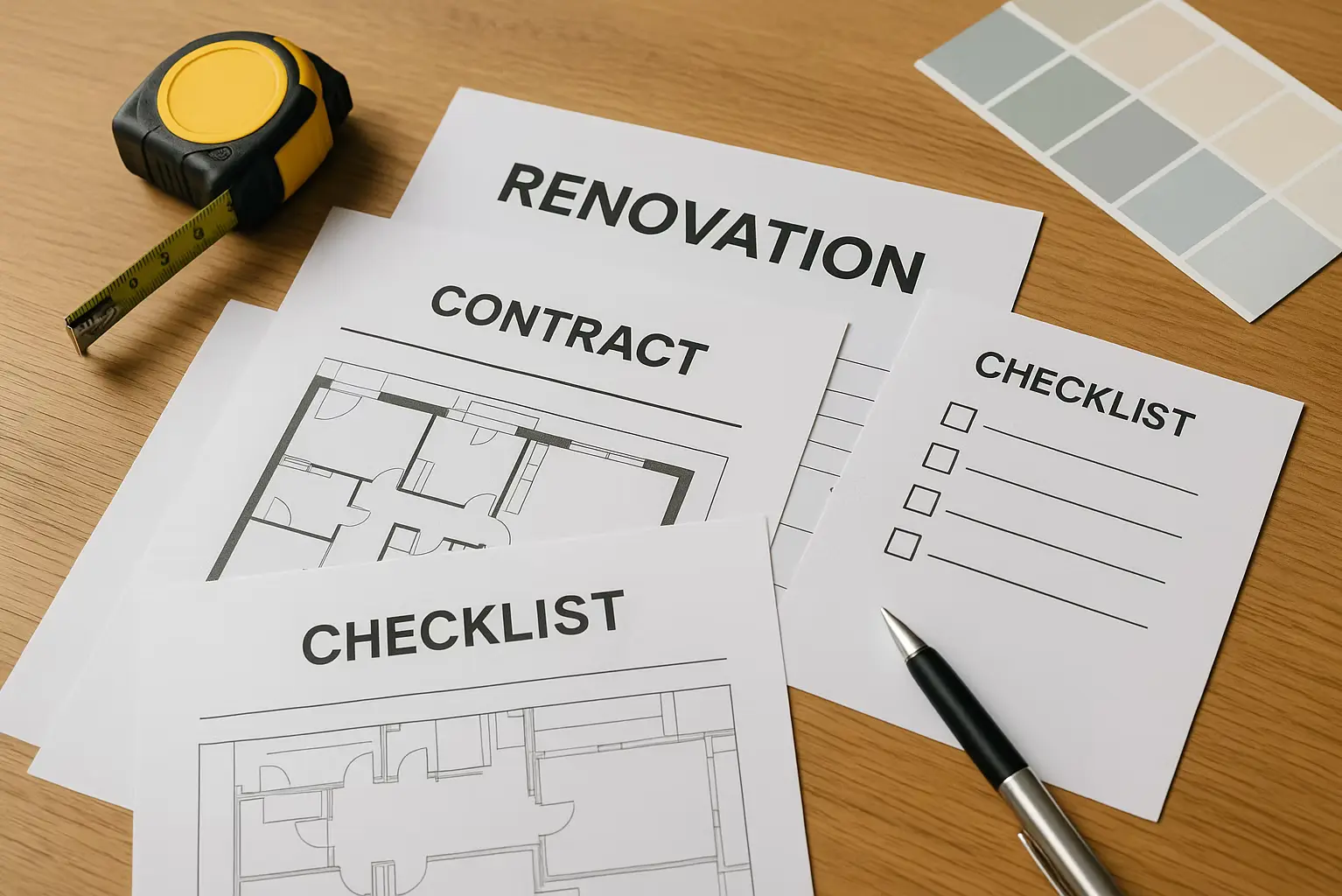
Home Renovation Document and Contract Checklist
Why it matters:
Renovation is not just about tiles and paint — it's a legal, financial, and planning project. These documents help protect your rights, avoid disputes, control the budget, and ensure quality at each stage.
1. Contract with Contractor (a must-have!)
Why: This is your main protection if something goes wrong or deadlines aren't met.
What it should include:
- Scope of work (what exactly is being done)
- Materials: who buys them and when
- Timeline with milestones and deadlines
- Payment terms (by stage or date)
- Penalties for delay or poor work
- Warranty period
- Contact persons and communication method
Tip: If possible, attach design documentation as an annex so the result can be compared clearly.
2. Contract with Interior Designer (if applicable)
Why: Clarifies what you're paying for: concept, drawings, supervision, material selection.
What it should include:
- Number and type of drawings/renders
- Revisions included (how many?)
- Timeline for deliverables
- Site supervision — included or not?
- File format and delivery method (PDF, DWG, etc.)
3. Technical Project Documents
Why: Builders need these for accurate work — they describe how everything should be installed.
Includes:
- Measured floor plan
- Demolition/construction plans (if walls are moved)
- Electrical and plumbing schemes
- Ceiling and lighting plans
- Wall elevations with finishes and dimensions
- Furniture layout plan
✅ Without these plans, even a great builder may make guesses — and mistakes.
4. Design Concept & Moodboard
Why: Helps everyone understand your style and avoid off-brand decisions.
Includes:
- Moodboard with preferred style, textures, and color palette
- Key furniture and decor pieces
- Reference photos or inspirational rooms
- Short explanation of the design concept: What mood are you going for? What’s the functional or emotional goal?
✅ Share this with your contractors or designers to ensure materials and layout choices match your vision.
5. Detailed Cost Estimate & Payment Schedule (Smeta)
Why: Keeps your budget transparent and under control. Helps avoid surprises.
Includes:
- Breakdown of all work stages with pricing
- Estimated or confirmed cost of materials
- Optional add-ons (e.g. built-in vs. freestanding furniture)
- Payment timeline (e.g. 30% upfront, 40% after X stage, 30% upon completion)
- Clarification of who purchases what — you or the contractor
✅ Track actual expenses alongside to spot budget drifts early.
6. Invoices and Receipts
Why: Provides proof of purchase and protects your warranty rights.
Includes:
- Furniture, appliances, lighting, and plumbing fixtures
- Paints, flooring, tiles, and other finishing materials
- Design and contractor service payments
✅ Save both digital and printed copies. For large items, check return and exchange policies.
7. Guarantees & Warranties
Why: Covers you in case something breaks or malfunctions.
Includes:
- Warranty cards for all appliances
- Installer guarantees (e.g. kitchen cabinets, plumbing)
- Manufacturer warranties for surfaces and finishes (tiles, floors, etc.)
✅ Check if warranties require professional installation to stay valid.
8. Work Acceptance Certificates (by Stage)
Why: Confirms that work is completed and paid for in stages.
When to sign:
- After rough construction (walls, electrical, etc.)
- After plumbing and waterproofing
- After finishes (tiling, paint, etc.)
- Before final payment
✅ Write down any flaws or delays and agree on a deadline for fixes before signing.
9. Other Useful Documents
- 📑 Permissions/approvals — if you change layout or work in a historic building
- 🛡 Home insurance — check if it covers renovation-related risks
- 📋 Weekly checklist — to track what’s done and what’s not
- 📷 Photo report — useful for warranties and dispute resolution
Try it on your own project
Free app for iPhone, iPad, Mac, Android and Windows.